


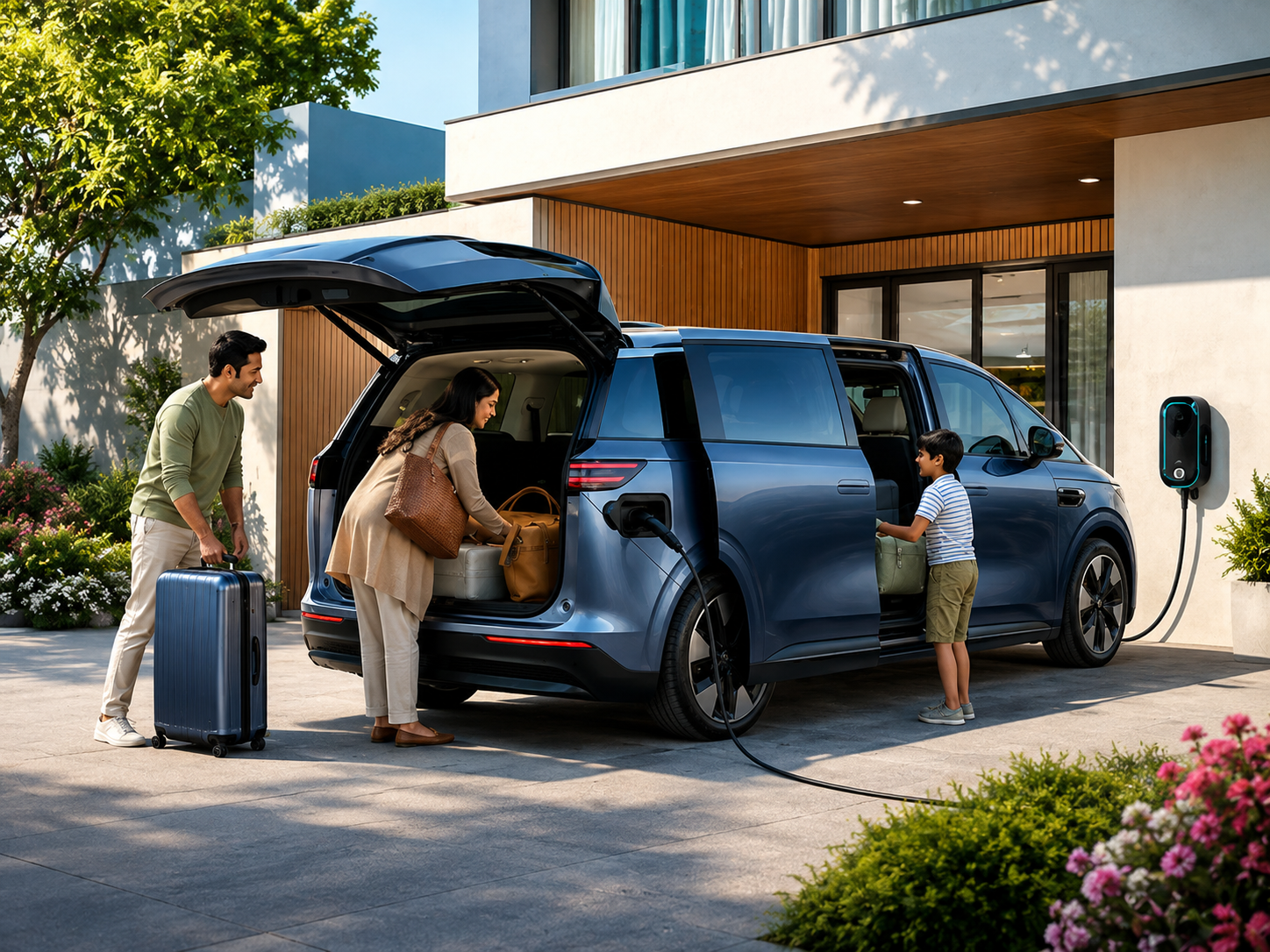
The idea of the perfect family car is changing. Earlier, the conversation was largely centred around seating capacity, boot space, fuel efficiency and everyday practicality. Today, buyers are looking beyond these basics. Lounge-like interiors, premium rear-seat comfort, advanced entertainment systems and cleaner powertrain options are becoming equally important.
At the same time, the growing adoption of electric vehicles is adding a new dimension to the way families choose their next car. These two developments—luxury MPVs and electrification—are gradually coming together and could play a major role in shaping family mobility over the coming decade.
For anyone considering a new vehicle in 2026 and beyond, understanding this shift could make the buying decision much clearer.
Luxury MPVs Are No Longer Just Practical Family Vehicles
MPVs have come a long way from being simple people movers. Traditionally, they were designed with functionality as the primary focus, offering spacious cabins, multiple seating rows and practical features. Styling, premium interiors and driving refinement often took a back seat.
That approach has changed significantly.
Modern luxury MPVs are being designed as premium travel spaces rather than just vehicles with extra seats. Buyers can now expect features such as individual captain chairs, ottoman-style leg rests, ambient lighting, advanced climate control and quieter, better-insulated cabins.
Models such as the Toyota Vellfire demonstrate how far the segment has evolved. Along with powered sliding doors and flexible seating arrangements, these vehicles focus heavily on passenger comfort, especially for those travelling in the second row.
This has also changed the way premium buyers look at MPVs.
Luxury SUVs and sedans were once the obvious choices for customers looking for an upscale family vehicle. However, many buyers are now considering luxury MPVs as a more comfortable alternative, particularly for chauffeur-driven use or long daily commutes.
The difference becomes especially noticeable during extended journeys. A well-designed captain seat with generous legroom can offer a level of comfort that is difficult for many traditional sedans to match. For families spending significant time on Mumbai roads or travelling between cities, the additional space and comfort can make a meaningful difference.
In many cases, once buyers experience the rear-seat comfort of a premium MPV, the appeal of a conventional sedan begins to fade.
The Growing Role of Electric Vehicles for Families
While luxury MPVs are changing expectations around comfort and space, electric vehicles are changing the economics and environmental impact of family mobility.
EVs are no longer limited to early adopters or technology enthusiasts. They are increasingly becoming a realistic option for families, particularly in major cities where charging infrastructure has expanded considerably.
For a family evaluating an electric vehicle, three factors usually play the most important role:
- Daily driving range requirements
- Access to convenient charging at home or work
- Overall ownership costs over several years
The long-term ownership equation can be particularly attractive. Electric vehicles have fewer mechanical components compared to conventional internal combustion vehicles. There are no engine oil changes, and regenerative braking can reduce wear on brake components.
Combined with lower energy costs per kilometre, these factors can help compensate for the higher upfront purchase price over time, depending on how frequently and how far the vehicle is driven.
The savings are often more substantial than buyers initially expect. A simple comparison of purchase prices does not always reflect the reduced maintenance requirements during the early years of ownership.
However, one challenge remains: product availability.
While the Indian market now offers a growing number of electric hatchbacks and compact SUVs, the luxury electric MPV segment is still developing. Automakers are actively exploring this opportunity, and Toyota electric cars provide an indication of how established manufacturers are building their electrification strategies while leveraging their experience in practical and family-oriented vehicles.
Where Luxury MPVs and Electric Powertrains Come Together
The connection between luxury MPVs and electric powertrains is more natural than it may initially appear.
Both types of buyers value refinement, quietness and advanced technology. Electric powertrains are inherently well suited to these expectations. They offer smooth acceleration, instant torque and significantly lower noise levels compared to traditional combustion engines.
This quieter driving experience can enhance the premium character of a luxury MPV, particularly for passengers seated in the rear.
Electric vehicle architecture can also create new possibilities for cabin design. The absence of certain conventional drivetrain components can allow manufacturers to rethink floor layouts and interior packaging, potentially creating even more usable passenger space.
However, electrification also introduces new engineering challenges.
Large battery packs add considerable weight to a vehicle. This additional mass can affect suspension behaviour, handling and tyre wear. For a luxury MPV, where ride comfort is one of the most important factors, manufacturers need to carefully tune the chassis to manage this weight.
Advanced systems such as air suspension and active damping are increasingly being used to maintain comfort and stability. Early electric MPVs in international markets have shown that electric power can deliver a level of refinement equal to, and in some cases better than, their conventional counterparts—but only when the vehicle’s suspension and chassis are engineered specifically around the additional battery weight.
What Should Families Consider Before Buying?
Families planning their next vehicle purchase are currently at an interesting point.
A conventional luxury MPV offers established technology, excellent long-distance convenience and access to a widespread refuelling network. It remains a practical choice for families that frequently travel between cities or cover long distances without predictable stops.
Electric vehicles, meanwhile, can offer lower running costs, reduced maintenance requirements and the benefit of cleaner mobility. For families with reliable access to home or workplace charging, the ownership experience can be particularly convenient.
The most practical decision comes down to understanding actual usage.
Families driving less than 80 km a day and having access to convenient charging are likely to find electric ownership increasingly suitable. On the other hand, those who regularly undertake long intercity journeys or live in areas where charging infrastructure is still limited may find a conventional luxury MPV easier to live with at present.
There is no single answer that works for every family.
Both luxury MPVs and electric vehicles are evolving rapidly. As charging networks improve and manufacturers introduce more electric vehicles with spacious, premium interiors, the gap between these two segments is likely to become much smaller.
The future of family mobility may not be about choosing between luxury, practicality and sustainability. Increasingly, it will be about finding all three in the same vehicle.


